Medical Assistant Training in Florida: What to Expect
Key Takeaways
Choosing a path in healthcare is an exciting step toward personal and professional growth, especially in a field as vital as medical assisting. Understanding the training process helps you navigate your journey with confidence and clarity.
- Medical assistant training provides both clinical and administrative skills.
- Hands-on externships are critical for real-world workplace experience.
- Certification exams validate your readiness for professional practice.
- Financial aid is available for those who qualify to support your goals.
Prerequisites and eligibility for Florida programs
Starting your medical assisting journey requires meeting several foundational standards to ensure you are well-prepared for the rigors of the healthcare environment. Schools typically look at your commitment and readiness rather than just past accolades, aiming to build a cohort of students who are dedicated to patient care. Understanding these basics now helps remove uncertainty later.
Educational foundation and academic requirements
Most technical and career programs in Florida require a high school diploma or a GED equivalent to get started. Academic preparation often includes basic biology and mathematics, which help you grasp medical terminology and dosage calculations more effectively during your core coursework.
Background checks and health screenings
Because you will be working directly with vulnerable patient populations, schools and clinical sites mandate thorough criminal background checks and specific health immunizations. These screenings are a standard aspect of maintaining the safety and integrity of the clinical settings where you will eventually perform your daily work.
Physical demands of the medical assisting field
It is helpful to acknowledge that this role is active and requires sustained energy throughout the day. You will spend significant time on your feet, assisting with patient movement, managing diagnostic equipment, and navigating busy hallways in a medical practice.
Core components of the training curriculum
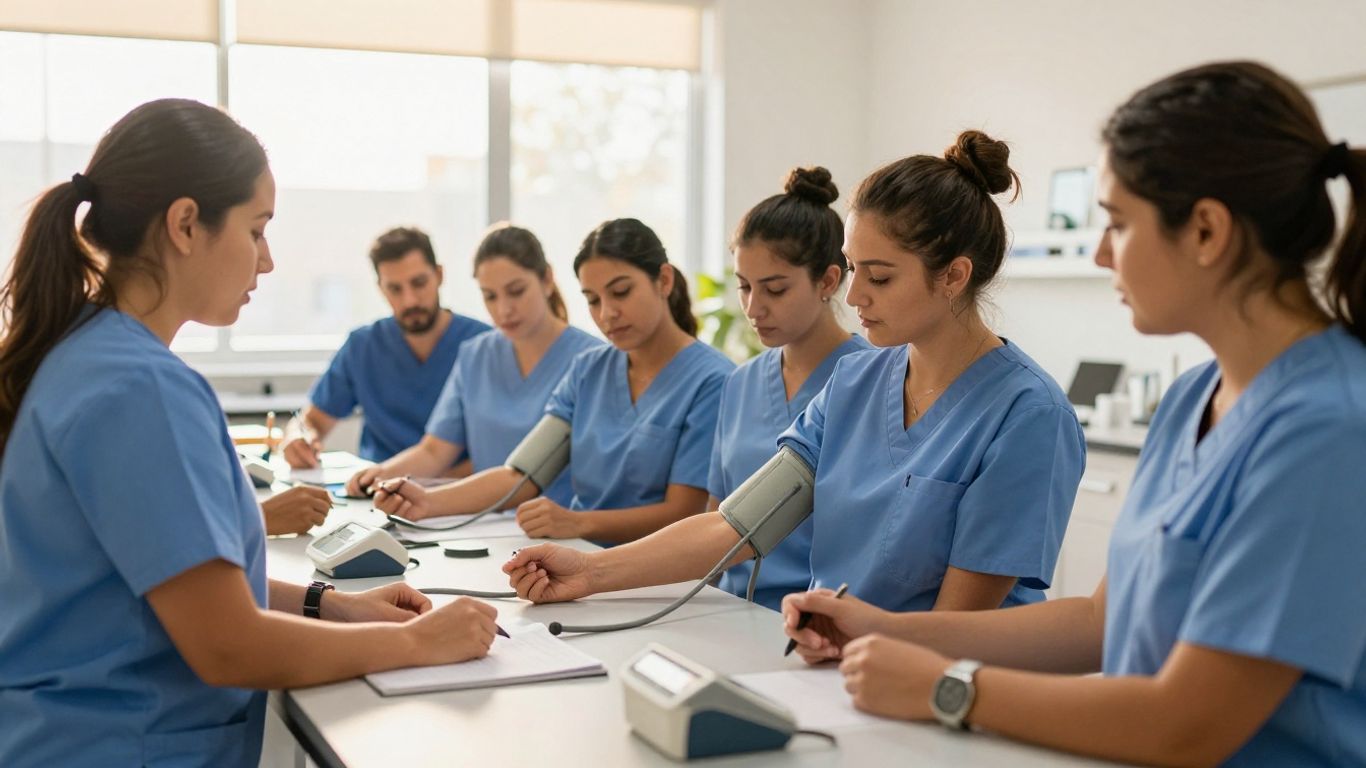
Training programs at institutions like the Florida Education Institute are designed to provide a comprehensive look at what a medical assistant does in a real clinic. By blending theory with hands-on practice, you gain the confidence to manage a variety of tasks that keep a healthcare office running smoothly. This approach helps students transition from classroom learning into professional roles without feeling overwhelmed by the variety of tasks.
Administrative medical assistant duties
Administrative modules cover the essential front-desk operations that form the backbone of a medical practice. You will learn to manage electronic health records, handle scheduling systems for high-volume offices, and ensure that patient intake flows seamlessly throughout the day.
Clinical medical assistant procedures
Clinical instruction shifts your focus toward the examination room, where you learn to interact directly with patients. You will practice measuring vital signs, recording medical histories, and assisting healthcare providers with routine examinations to ensure everyone receives high-quality attention.
Laboratory techniques and sample collection
In the lab, you will be taught the delicate tasks of specimen collection and basic diagnostic testing. Educators emphasize the accuracy and precision required in these scenarios, ensuring that you understand the following core protocols for maintaining safety:
- Proper labeling of all biological samples for tracking.
- Consistent use of personal protective equipment at all times.
- Sanitization of all surfaces before and after any collection.
- Careful disposal of sharps in authorized, puncture-resistant containers.
- Verification of patient identities before performing any diagnostic tests.
These protocols are essential to learn early because they serve as the foundation for your daily clinical safety and accuracy.
Medical ethics, law, and HIPAA compliance
Beyond technical skill, you must understand the legal language of healthcare and the importance of patient privacy. HIPAA regulations are central to every task you perform, and instructors guide you through the ethical nuances of managing sensitive health information in a professional manner.
Clinical vs. administrative specializations
While many programs are comprehensive, your career might lean toward one specific environment over another as you discover your personal strengths. Making this distinction allows you to focus your energy where you feel most called to serve, whether that is the quiet organization of the front office or the high-energy environment of the clinical examination room.
Focused training for front-desk and patient management
Front-desk specializations emphasize communication skills, medical billing processes, and effective office workflow management. This track is ideal for those who enjoy coordinating logistics, greeting patients, and ensuring the administrative house is in order.
Practical skills for examination room support
Clinical-focused paths devote more time to patient-facing duties, such as performing EKGs, injections, and wound care. You will spend your classroom time working with simulated patients to practice these technical medical assisting skills in a low-risk environment before testing in real healthcare facilities.
Choosing the right training track for your career goals
Selecting your track depends on where you envision yourself working, such as a specialized dermatology practice versus a fast-paced urgent care center. Consider your own preferences for interaction levels and office environment to guide your choice. To help compare the common pathways, the following table outlines typical focus areas:
| Specialization | Primary Focus | Typical Setting |
|---|---|---|
| Front Office | Patient Billing | Reception or Records Dept |
| Back Office | Patient Exams | Exam Rooms or Labs |
| Hybrid Role | Both Categories | Primary Care Practices |
By weighing these differences, you can better align your education with your long-term vision for your working life.
Financial investment and program duration
Choosing a path involves looking at the time and resources you can commit, and being informed helps you avoid unnecessary pressure. There are diverse options available, ranging from deep-dive technical programs to community-based learning, which means there is usually an option that fits a student’s specific life situation.
Comparing technical colleges, private schools, and community colleges
Technical colleges often prioritize fast-tracked, industry-specific training designed to get you into the labor market quickly. Community colleges might offer broader general education tracks, while private schools can focus on smaller class sizes and intensive mentorship to help you grow into your new role.
Tuition costs and financial aid options in Florida
Financial aid is available for those who qualify, and it is standard to discuss your specific needs with a school's financial aid office early on. Understanding how to manage your investment makes the process more transparent, allowing you to focus on your studies instead of the logistics of funding.
Accelerated versus traditional program timelines
Accelerated programs are designed for learners who need a direct, no-fluff path into their new career, often finishing in less than a year. Traditional courses might run longer, allowing for more breaks and a slower pace to absorb the massive amount of information required for patient care.
Completing your externship in a Florida facility
Your externship is the final bridge between your classroom learning and your actual employment in the medical field. It is a time for you to observe existing professionals at work, ask questions, and step into your role with the mentorship of experienced staff. This hands-on time is often where everything you have learned finally clicks into place.
Finding placement opportunities in local healthcare networks
Schools coordinate these placements within local clinics and hospitals to ensure you get exposure to diverse patient needs. Whether you are placed in a large hospital system or a small boutique office, you are getting a direct look at the daily operations of local providers.
Applying classroom skills in real-world clinical settings
When you begin your externship, you will apply the protocols you learned in school to actual patient scenarios under the guidance of a supervisor. Seeing how theory works during a real patient encounter is the most transformative part of your professional training.
Networking with prospective employers during clinical hours
Your conduct during your externship is effectively a long-form interview where your potential future colleagues can see your work ethic in action. Maintaining professional standards and a helpful attitude during these hours builds your reputation long before you have officially graduated and applied for your first paid role.
Conclusion
Your path to becoming a medical assistant in Florida is a journey of growth that transforms your interest in helping others into a tangible, professional capability. By focusing on your classroom training, passing your examinations, and excelling during your externship, you set yourself up for a long and rewarding career in the healthcare industry.
Frequently Asked Questions
Is medical assistant training in Florida difficult?
Like any vocational path, the difficulty depends on your dedication level and your willingness to learn new medical protocols, but most students find the hands-on nature of the work highly engaging and manageable.
How long does it usually take to become a medical assistant?
Most technical programs take anywhere from nine to twelve months to complete, depending on whether you choose a full-time, accelerated, or part-time schedule.
Do I need a college degree to work as a medical assistant?
In most cases, you do not need a multi-year degree; a certificate or diploma from an accredited career technical school is typically sufficient to qualify for entry-level positions.
Can I work while going to medical assistant school?
Many programs are designed with the assumption that students may have outside responsibilities, so they offer flexible scheduling or hybrid formats to help you balance your education and employment.
What are the most important subjects to study during training?
Focusing on medical terminology, human anatomy, and proper laboratory procedure is essential, as these components form the foundation for every other skill you will utilize in a clinical setting.
More Career Training
Latest in Career Training

How to Choose an Accredited Trade School in Florida
Key Takeaways Transitioning into a new career through vocational education requires careful research to ensure you find a program that truly prepares you…
Read more
How to Become a Medical Assistant: A Step-by-Step Guide
Key Takeaways Starting a new career in healthcare is a significant milestone that requires preparation, focused education, and clear goals. This guide breaks…
Read more